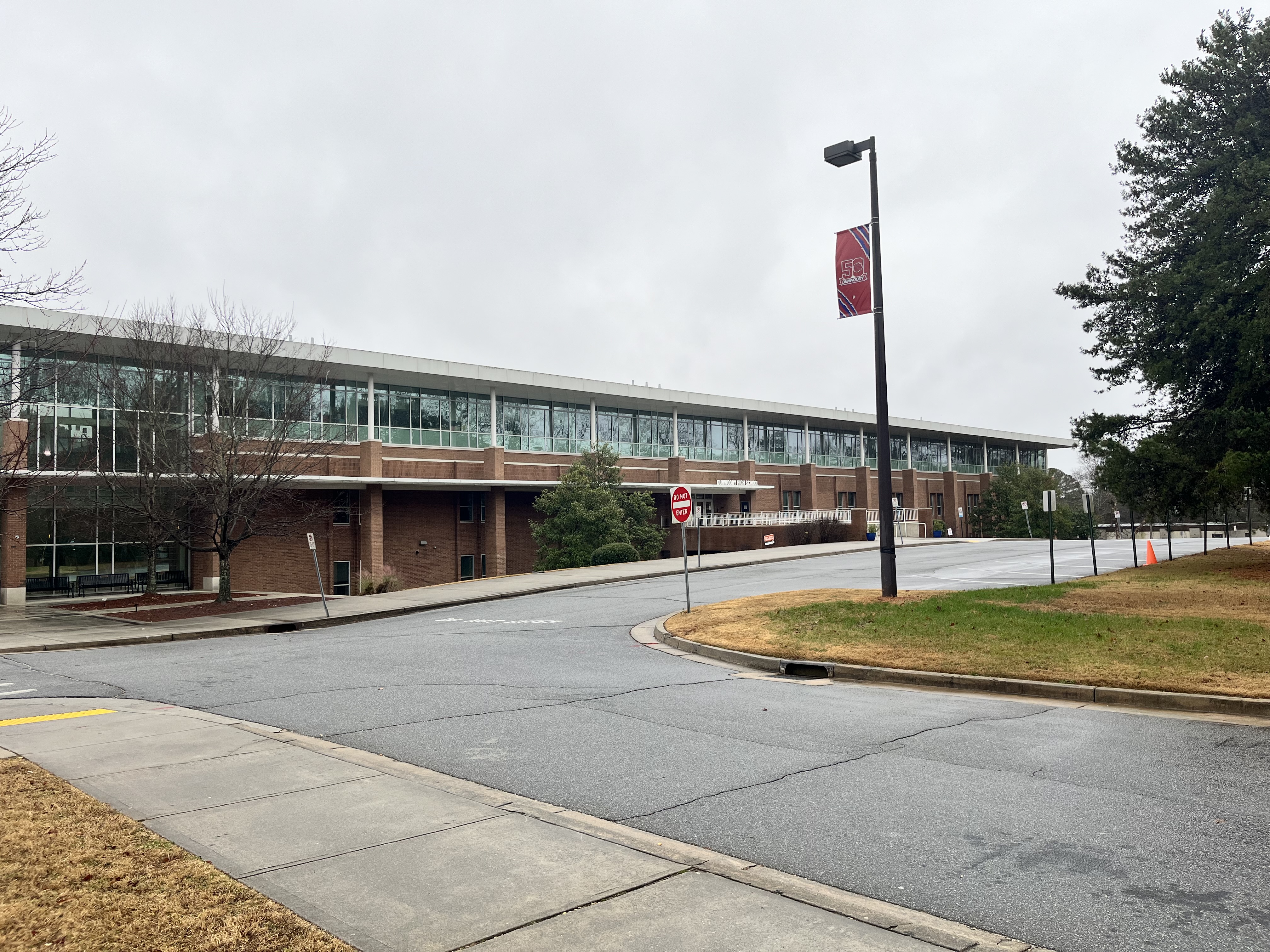
The DeKalb County School District adopted a 22.78-mill tax rate on June 15 and disclosed an unresolved overpayment of sales-tax revenue to partner districts. Both developments land as a statewide analysis finds Georgia school districts entering a period of fiscal contraction after years of rapid spending growth.
For a Dunwoody or Brookhaven homeowner with a $425,000 property, the millage rate translates to roughly $62 more per year in school taxes, according to DCSD's public notice on the proposed rate. The rate is unchanged from 2025, but Georgia law defines it as a tax increase of 0.356 mills above the calculated rollback rate of 22.424 mills because total taxable property values rose.
The ESPLOST VI problem adds uncertainty. From July 2022 through May 2026, DCSD received a larger share of the penny sales tax revenue than the percentages approved by all three participating boards of education in March 2022. The approved split gives DCSD 90.44%, City Schools of Decatur 5.45%, and Atlanta Public Schools 4.11%. The district has not disclosed the total overpayment amount; ESPLOST VI generates hundreds of millions in total revenue across nearly four years, meaning even a small percentage error could represent a significant sum.
Interim Superintendent Dr. Norman C. Sauce III said the district "took immediate action" once the discrepancy was identified and is working with the Georgia Department of Revenue and both partner districts to resolve it.
A statewide analysis published July 13 by Georgia Recorder reporter Jeff Amy found that total K-12 revenue and spending rose nearly 50% from 2018 to 2024, according to the Georgia Department of Audit and Accounts. Districts stacked up $5.2 billion in unassigned fund balances by 2024, up from $2.4 billion in 2019. Six of the state's 10 largest districts plan to spend down a combined $175 million in savings this budget year.
Georgia school enrollment peaked at 1.77 million in 2019 and has been falling since 2023, driven largely by declining birth rates. From 2019 to 2025, districts hired the equivalent of 18,000 additional full-time employees, an 8% headcount increase, even as enrollment dropped 1%, according to the Edunomics Lab at Georgetown University.
"The new reality for most of these districts is going to be declining enrollment," said Kyle Wingfield, president and CEO of the Georgia Public Policy Foundation.
A new state law signed by Gov. Brian Kemp in May 2026 caps property tax assessments at the rate of inflation, limiting how much districts can benefit from rising property values without raising millage rates. Neighboring Coweta County Schools eliminated 47 teaching positions through attrition in its 2027 budget. Fulton County Schools plans to spend $57 million of its $269 million fund balance and has included a potential furlough day in May 2027.
Against that backdrop, DCSD's 2027 budget adds 75 literacy coaches for K-3 classrooms and additional kindergarten paraprofessionals across the district's 135 schools, according to a June 15 district budget summary. The new hires reflect a pattern the statewide analysis identified: districts continuing to add staff even as revenues flatten and enrollment declines.
The assessment cap signed into law in May means DCSD and other Georgia districts will have less room to grow property tax revenue in future years without asking voters to approve a higher millage rate.