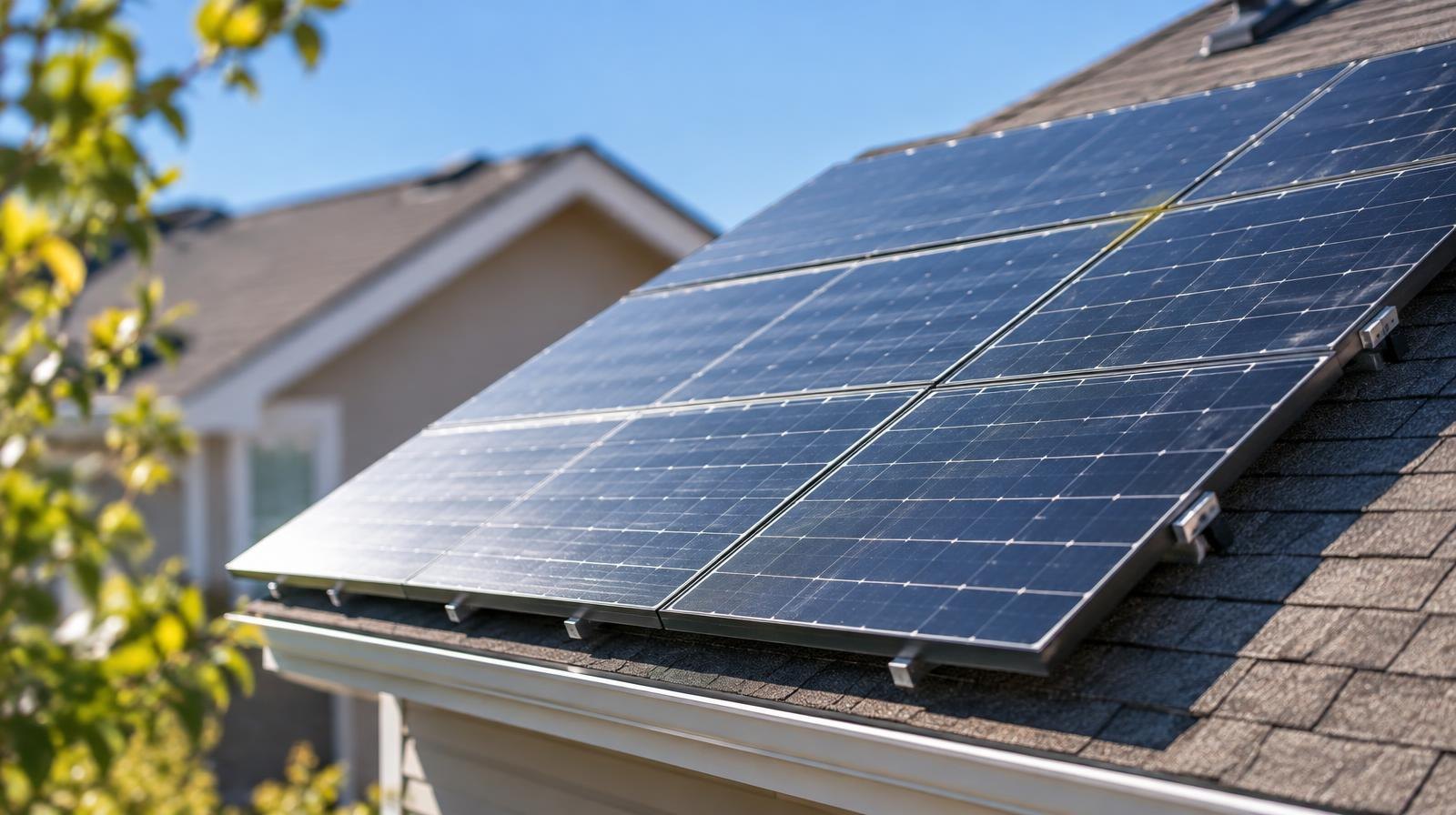
Metro Atlanta has the lowest residential solar adoption rate among the 20 most populous U.S. metropolitan areas, according to a new Atlanta Regional Commission analysis.
The analysis, based on 2025 American Community Survey estimates, found solar panels at just 1.1% of the metro’s housing units. Four California metropolitan areas and Phoenix occupied the five highest positions.
Statewide, Georgia’s solar coverage was 1.7%, placing it 39th among the 50 states and Washington, D.C.
For Dunwoody and Brookhaven homeowners considering solar, the findings come as changes to federal incentives affect installation costs.
Federal credit ended after 2025
The 30% federal Residential Clean Energy Credit ended for new qualifying expenditures after Dec. 31, 2025, under legislation signed in July 2025.
The IRS says an expenditure generally counts when installation is completed. Paying before the deadline did not preserve eligibility for a system installed afterward. IRS guidance
For illustration, a qualifying $24,000 installation could previously have generated a $7,200 credit. A comparable installation completed in 2026 does not qualify for that credit.
Georgia previously offered solar and clean-energy income tax credits, but it does not currently offer a statewide residential solar income tax credit. Georgia’s historical solar-credit rules
Exported electricity earns a lower credit
Georgia Power’s current rooftop-solar program credits electricity sent to the grid at a rate below the full retail price.
For 2026, the utility lists a solar avoided-cost rate of 3.2188 cents per kilowatt-hour, plus a 4-cent adjustment approved by the Public Service Commission. Together, that amounts to approximately 7.22 cents per kWh. Georgia Power’s program guidance
Eligible residential systems may have a peak generating capacity of up to 10 kilowatts AC. Participation is first-come, first-served until enrolled renewable generating capacity reaches 0.2% of Georgia Power’s previous year’s peak demand.
The financial benefit of using solar electricity at home depends on the customer’s rate plan and the charges avoided. Fixed monthly charges remain even when a household reduces its electricity purchases.
Electricity prices help explain adoption
ARC found a positive correlation of 0.65 between state residential electricity prices and solar adoption. That relationship suggests higher electricity costs may encourage installation, though it does not establish that prices alone determine adoption.
Georgia’s average residential electricity price was 15.90 cents per kWh in August 2026, according to the U.S. Energy Information Administration. That statewide average is distinct from the rate an individual Georgia Power customer pays.
ARC also noted low adoption in Tennessee and Alabama, suggesting historically lower electricity prices in areas served by the Tennessee Valley Authority as one possible explanation.
Check HOA rules and city permits
Homeowners in association-governed neighborhoods should review their covenants before committing to an installation. Georgia has not enacted a general prohibition on HOA restrictions against solar panels.
An earlier solar-access proposal, HB 483, belonged to the 2021–22 legislative session. A separate proposal, HB 389, addressed association restrictions during the 2025–26 session. HB 483 history, HB 389 text
Dunwoody and Brookhaven homeowners should apply through their respective cities for installation permits.
Brookhaven’s solar-permit page lists requirements including a site plan, electrical diagram and equipment specifications. Dunwoody offers an expedited process for residential rooftop photovoltaic systems.
ARC plans further analysis of solar adoption within the region. Because the ACS solar question was introduced in 2025, the agency says census-tract estimates will require four more years of data collection.